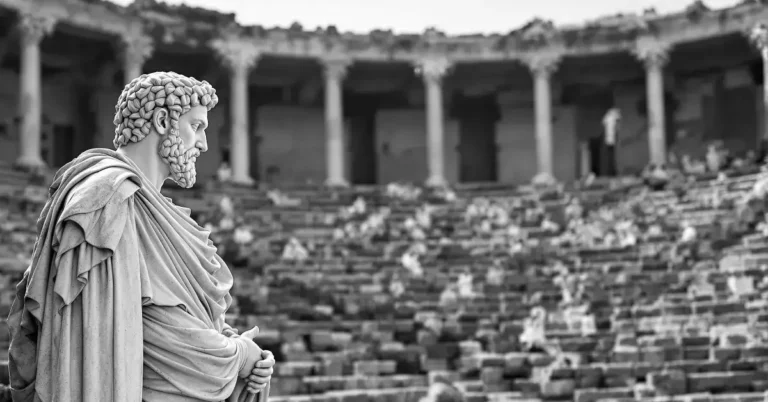
How Stoicism Changed My Life?
Let’s face it: the idea of stoically managing your emotions sounds like a superpower. I mean, who wouldn’t want to be the person who doesn’t get bent out of shape over the small stuff? Learning how to train your mind and respond instead of reacting was a total game-changer for me. When I first started applying Stoic philosophy to my daily life, things began to shift in ways I didn’t even anticipate.
Take Marcus Aurelius, for example. The guy was all about emotional control. “You have power over your mind—not outside events,” he said. Once I wrapped my head around that, I realized that the stress, frustration, or anger I’d been feeling wasn’t coming from the world outside—it was coming from inside me. So, if I wanted to change my emotional landscape, it all started with how I chose to respond to things.

Why Stoicism Is Important?
Stoicism isn’t just about sitting in a room, contemplating the meaning of life. It’s about real-world applications for controlling your emotions, maintaining peace of mind, and building resilience. Learning how to practice Stoicism taught me how to respond thoughtfully, rather than reacting impulsively.
When you embrace Stoic principles, you develop the ability to look at situations from a different angle. Instead of being overwhelmed by life’s challenges, you approach them with calm and clarity. It helps you live in a way that’s intentional, focused, and far less emotionally draining. You control the narrative. And that, my friends, is priceless.

The Cost of Being Reactive
Ever typed out a text while raging with anger, only to regret it seconds later? Same. And guess what? That message has already done its damage. The cost of reacting impulsively? Your peace of mind, your relationships, and, sometimes, your reputation. Being reactive is like setting off a chain of fireworks—fun at first, but by the end, you’re just left cleaning up a mess.
Marcus Aurelius nailed it when he said, “You have power over your mind—not outside events.” So, when that email from your boss sends you into a mental spiral, remember—you control how you respond. Choose your reaction wisely, and take your power back.

Stoicism and Controlling Emotions: Train Your Mind Thru Self-Awareness
Self-awareness is the first step to controlling your reactions. You know that feeling when you’re in the middle of an argument, firing off your best comebacks, only to realize—oh no, maybe I’m wrong? That’s the moment when you realize your emotions have been driving the car, while logic was just in the backseat.
What the Stoics teach us is that how we interpret events is what shapes our reactions. Marcus Aurelius once said, “If you are distressed by anything external, it is not the thing itself that troubles you, but your judgment about it.” So, it’s not what happens—it’s how you judge it that makes you angry or upset.
The Power of the Pause: How to Control Your Emotions Stoicism Style
Pause. Breathe. Think. How many times have you wished you had taken a moment before firing off that reply or responding impulsively? I know I have. The Stoic practice of giving yourself a moment of pause—before acting, before speaking, before reacting—can be a total game-changer.
Taking a moment to think about how you want to respond instead of simply reacting gives you space to reflect. Marcus Aurelius put it perfectly: “Give yourself time to learn something new and good, and cease to be whirled around.” That “pause” is what separates a regretful outburst from a wise, level-headed response. The next time you’re tempted to snap back, take a deep breath. Trust me, the pause is worth it.
Reframing Reality - A Stoic Superpower
Here’s a scenario: You spill coffee on yourself before a big meeting. It’s a nightmare, right? Well, maybe not. What if you could reframe that disaster into something more… manageable? Reframing allows you to control how you view situations and, ultimately, how you respond.
Marcus Aurelius famously said, “The impediment to action advances action. What stands in the way becomes the way.” In simple terms, obstacles aren’t problems—they’re opportunities. That last-minute plan cancellation by your friend? Instead of fuming, reframe it. Now you have time to catch up on your favorite book. Bam. Perspective shift.

Stoicism and Controlling Emotions: Taking Control of What You Can
Here’s the thing: You can’t control people, traffic, or even Wi-Fi outages. But what you can control is your response to them. When you practice Stoicism, you let go of the things that are beyond your control, and focus on what you can change—your mindset and your actions.
Marcus Aurelius summed it up best: “You must build up your life action by action, and be content if each one achieves its goal as far as possible.” That means you can’t control every detail of your life, but you can make sure you respond to each situation with intention. Respond calmly to the situation, and you remain in control.
Watch Level Stoic Video on Emotional Control
Stoic Quotes on Controlling Emotions
The Stoics left us with a treasure trove of wisdom. If you ever need a reminder of how to keep your emotions in check, just look to their timeless quotes:
- “No man is free who is not master of himself.” — Epictetus
- “The greatest wealth is to live content with little.” — Plato
- “A man is not hurt by what happens, but by his opinion of what happens.” — Epictetus
- “You have power over your mind, not outside events. Realize this, and you will find strength.” — Marcus Aurelius
- “How much time he gains who does not look to see what his neighbor says or does or thinks.” — Marcus Aurelius
- “It is not things themselves that disturb us, but our opinions about them.” — Epictetus
These Stoic quotes on controlling emotions remind us that happiness and peace come from within. The key to emotional control is realizing that you hold the power to shape how you experience the world.
Stoicism - What You Can Control
When life throws curveballs, it’s easy to feel powerless. But the beauty of Stoicism lies in its simplicity: Focus only on what you can control. You can’t control how someone else behaves, but you can control how you respond. Whether it’s a frustrating coworker, an awkward family dinner, or an annoying traffic jam, the Stoic path is all about making peace with what is—and responding with wisdom.
Next time you feel yourself on the brink of reacting emotionally, remember: You control your mind. You control your thoughts. And ultimately, you control your response. If you’ve ever wondered how to control your emotions with Stoicism, it starts with this simple truth: You decide how to react.
Conclusion - Train Your Mind, Master Your Life
Reacting impulsively leads to chaos. But with Stoicism, you don’t have to be a victim of your emotions. Train your mind to pause, reflect, and choose your responses. The more you practice emotional control, the stronger and wiser you become. Let Stoicism be your guide to mastering the art of response over reaction—and watch as your life begins to transform.
Embrace the power of Stoic emotional control, and become the calm, wise person who responds, not reacts.